Post-COVID: research program, knowledge infrastructure and expertise network

ZonMw Post-COVID programme

Post-COVID, also known as long COVID, refers to long-term health problems following a COVID-19 infection. There is still much unknown about the cause of post-COVID and the disease profile. Research into post-COVID helps to better understand the disease and to improve diagnostics, treatment, and care for post-COVID patients.

The Post-COVID programme of ZonMw is carried out on behalf of the Ministry of Health, Welfare and Sport (VWS). The Post-COVID programme has opened several funding rounds, through which both the research and expertise network Post-COVID Network Netherlands, as well as various research projects, are funded. Read more about the Post-COVID programme here.

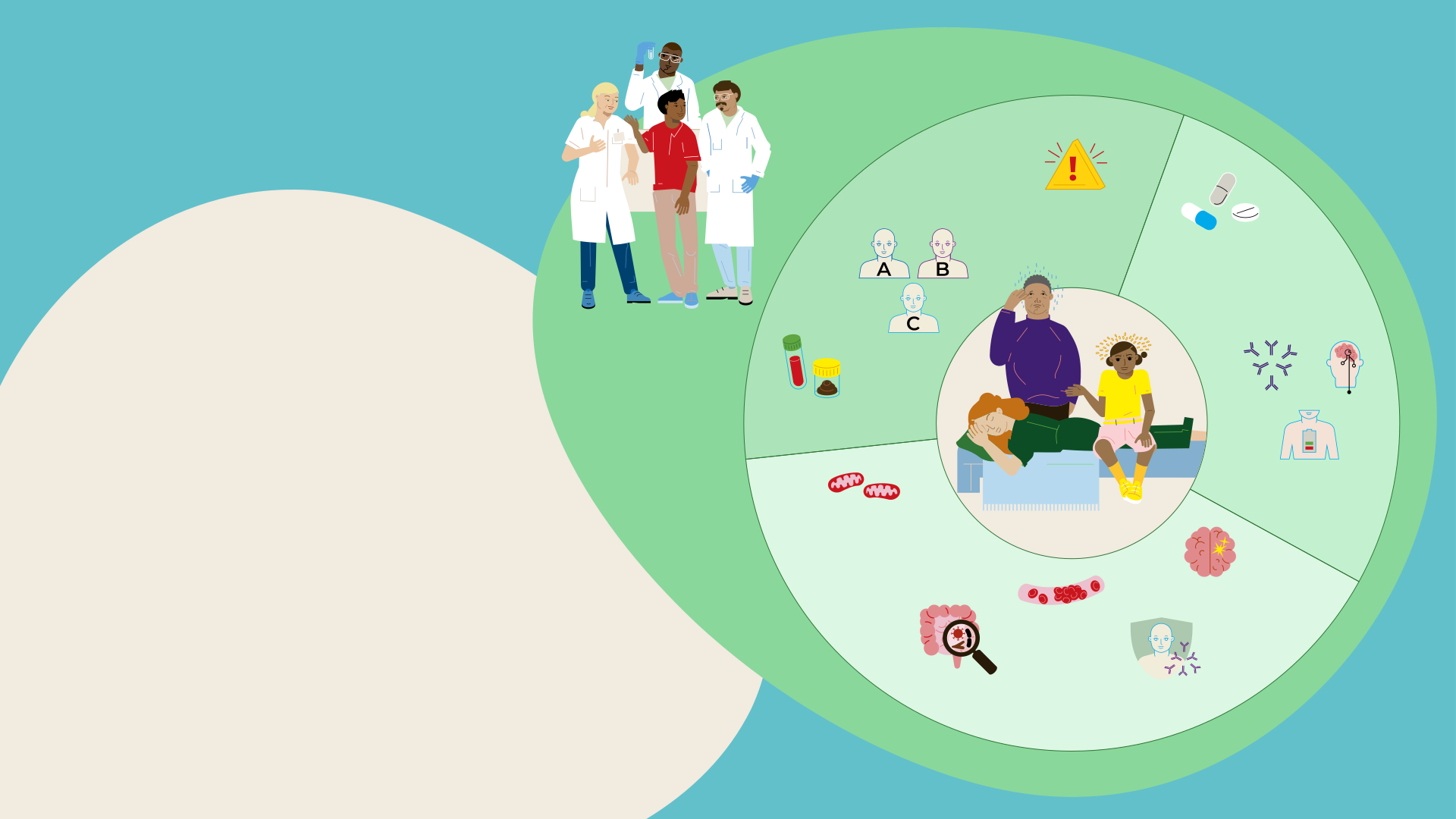
This infographic provides an overview of the ongoing post-COVID research projects funded by ZonMw. The studies focus on 3 main themes:

  • Disease mechanisms
  • Diagnostics
  • Treatment

Want to learn more? Click on 1 of the titles.
Post-COVID patients

People with post-COVID are at the centre of the Post-COVID programme. The aim is to help them as quickly and effectively as possible and to improve their quality of life.

Post-COVID affects both children and adults. Symptoms are reported more frequently by women than men. The severity of symptoms varies: some people are able to work or attend school, while others are (partially) housebound or bedridden.

It is important that research includes all groups: people of different ages and genders, and people with mild as well as severe symptoms. Post-COVID can manifest itself in multiple ways. A better understanding of these differences will help tailor care to the individual patient.

Although most projects focus on adults, research is also being conducted into children and people who are bedridden.

Patient participation

Within the Post-COVID programme of ZonMw, the research projects, Post-COVID Network Netherlands and experts by experience are closely involved.

Experts by experience are people with post-COVID or relatives of people with post-COVID. They provide insight into patients’ needs and help identify which research questions should be prioritised. They advise on how patients can participate in and contribute to research (without additional burden). Their input is essential to ensure that research and policy are well aligned with practice.

Collaboration with experts by experience enhances the quality, relevance, and impact of post-COVID research and contributes to better care and support.

Research involving children

Children are not small adults. Post-COVID often presents differently in children than it does in adults. The impact on daily life is also different from that in adults. Therefore, it is important that research into post-COVID in children is designed differently, taking into account their age and stage of development. Through research specifically focused on children, we hope to gain a better understanding of how post-COVID presents in children and how they can best be supported.

The following research projects focus on children with post-COVID:

Research involving bedridden patients

For some people with post-COVID, symptoms are so severe that they are bedridden or largely confined to bed. They can no longer, or barely, participate in daily life. Research is specifically designed to ensure that this group can be effectively reached and included. Studying these severely ill patients is crucial to gain a better understanding of the condition and to developing appropriate care.

The following research projects focus on bedridden patients with post-COVID:

Research involving other patient groups

Some patient groups with post-COVID have been studied only to a limited extent. As a result, little is known about how frequent symptoms occur and how they manifest in these groups. More knowledge about these populations is important to improve our understanding of differences in symptoms and access to healthcare.

The following research projects focus on other patient groups with post-COVID:

Symptoms

People with post-COVID can experience severe symptoms that have a major impact on their daily life. Examples of common and most limiting symptoms include:

  • Post-exertional malaise (PEM): PEM is a worsening of symptoms after (minimal) physical, cognitive, and/or emotional exertion.
  • Postural orthostatic tachycardia syndrome (POTS): POTS is a form of orthostatic intolerance and causes a significant increase in heart rate upon standing, often accompanied by symptoms such as palpitations, fainting, and fatigue.
  • Cognitive problems: For example, difficulties with concentration and memory.
  • Exhaustion: Severe, persistent fatigue that does not improve with rest.

These symptoms often occur together and can worsen one another. Research into these symptoms is needed to gain a better understanding of their causes and to develop appropriate treatments.

Want to learn more about research into these symptoms? Click on the different ‘Research into …’ buttons.

Diagnostics

Diagnostics refers to the process of establishing a diagnosis: the process by which physicians and researchers determine the cause of the patient’s symptoms. To do this, they use a range of tools, including questionnaires, physical examinations, blood tests, and scans.

In post-COVID, symptoms are often complex and can vary from person to person. Therefore, there is a need for good diagnostic tools to better identify and recognise patients with post-COVID.

Research into diagnostics focuses on:

  • biomarkers (measurable indicators in the body)
  • risk factors for developing post-COVID
  • subtypes of post-COVID patients

This helps physicians gain a better understanding of the underlying causes of symptoms and enables them to provide more targeted and appropriate treatment.

Disease mechanisms

Disease mechanisms are the disruptions in the body that cause post-COVID. The exact underlying causes of post-COVID are still unknown. However, there are several indications of possible disease mechanisms that may be responsible for post-COVID symptoms.

  1. Viral persistence: the continued presence of viral particles in the body
  2. Immune system dysregulation and autoimmunity: the immune system remains overactive or attacks the body’s own tissues
  3. Endothelial damage and thrombosis: damage to blood vessels and disturbances in blood clotting
  4. Neuroinflammation and disrupted nervous system function: inflammation in the brain and impaired communication between the brain and the body
  5. Mitochondrial dysfunction: problems with energy production within cells
  6. Changes in the microbiome: disruptions of microorganisms in the gut, including bacteria, viruses and fungi

Within the ZonMw post-COVID research projects, several of these mechanisms are being investigated. The aim is to gain a better understanding of the underlying processes, which may ultimately contribute to improved diagnosis and treatment.

Biomarkers

A biomarker is a measurable indicator in the body that provides information on a disease or condition. This may include, for example, a specific substance in the blood or stool.

Researchers are working to identify biomarkers associated with post-COVID. If reliable biomarkers are found, they could help physicians diagnose post-COVID more accurately in the future. In addition, biomarkers may provide insight into the underlying disease mechanisms and help tailor treatment more effectively to the individual patient.

Want to learn more about research into biomarkers? Click on ‘Research projects’.

Risk factors

Why do some people develop post-COVID while others do not? And what is the risk for people with post-COVID of developing other chronic conditions, such as cardiovascular disease or dementia?

To answer questions like these, researchers study risk factors: characteristics that may increase the likelihood of developing post-COVID or other chronic conditions. These may include factors such as age, sex, ethnicity, and the severity of symptoms.

By gaining a better understanding of these risk factors, it becomes possible to earlier identify who is at increased risk of developing post-COVID. This can help ensure that patients receive support more quickly.

Want to learn more about research into risk factors? Click on ‘Research projects’.

Subtypes

Post-COVID does not affect everyone in the same way. Some people primarily experience extreme fatigue, while others have symptoms such as breathing difficulties, memory problems, or a combination of these. Based on the type of symptoms or the underlying processes in the body that are not functioning properly, people with post-COVID can be grouped into categories, known as subtypes.

By studying these subtypes, physicians may in the future be able to better tailor treatments to specific symptoms or to the underlying biological processes that are disrupted.

Want to learn more about research into subtypes? Click on ‘Research projects’.

Immune system

The immune system protects your body against pathogens such as viruses and bacteria, and helps you recover when you are ill. There are indications that the immune system may be dysregulated and/or overactive in people with post-COVID. Research into this helps us better understand the role of the immune system in post-COVID.

Research on the immune system focuses on 3 areas:

  • Autoantibodies: antibodies that mistakenly attack healthy cells
  • Viral persistence: the continued presence of viral particles in the body
  • Immune cells and molecules: which immune cells and molecules play a role in post-COVID and how this differs from healthy individuals

Want to learn more about research into the immune system? Click on ‘Research projects’.

Microclots and thrombosis

To better understand post-COVID, it is important to study processes in the blood, such as blood clotting and inflammatory responses.

Research shows that the coronavirus may cause small blood clots, also known as microclots. Microclots can damage blood vessels. Inflammation and blood clotting may also interact and reinforce each other. This is known as thromboinflammation. This process may contribute to post-COVID symptoms. Research into microclots and thrombosis is important to gain new insights into the causes of post-COVID and to develop potential treatments.

Want to learn more about research into microclots and thrombosis? Click on ‘Research projects’.

Neuro­inflammation

Many people with post-COVID experience long-term symptoms such as concentration problems, memory loss, and brain fog. One possible explanation is neuroinflammation: an inflammatory response in the brain.

In research on neuroinflammation, scientists study how the immune system affects brain cells and neural connections. In addition, these inflammatory processes may disrupt blood flow in the brain. Researchers investigate how and where this inflammation develops, what its effects are, and what can be done to address it.

Want to learn more about research into neuroinflammation? Click on ‘Research projects’.

Mitochondria

People with post-COVID often experience extreme fatigue, even after minimal exertion. In these studies, researchers focus on mitochondria: the energy-producing structures within our cells.

Mitochondria are responsible for supplying the body with energy. There are indications that mitochondria may function less effectively in people with post-COVID. By studying this, researchers hope to better understand the origin of severe fatigue and how it might be treated.

Want to learn more about research into mitochondria? Click on ‘Research projects’.

Microbiome

The microbiome is the collection of bacteria, viruses, and fungi that live in and on our bodies. Most of these microorganisms are found in the gut. The microbiome plays an important role in our health: it helps with digestion and supports the immune system.

After a COVID-19 infection, the composition of the microbiome, and therefore the balance in the gut, may remain disrupted for an extended period. This disruption may contribute to post-COVID symptoms.

In microbiome research, scientists investigate whether the composition of bacteria, viruses, and fungi is altered in people with post-COVID. They also study the role the microbiome may play in persistent symptoms and how this knowledge could lead to new treatments.

Want to learn more about research into the microbiome? Click on ‘Research projects’.

Research projects

Treatment

Research into the treatment of post-COVID and its specific symptoms is being conducted in various ways. Studies are underway on medications that may reduce symptoms, as well as on other non-pharmacological treatments. This way, researchers are investigating what best supports the recovery of people with post-COVID. The exact causes of post-COVID are still unknown. Therefore, research projects on potential treatments are primarily focused on alleviating symptoms.

Other treatments

Other non-pharmacological treatments may play an important role in managing or recovering from post-COVID symptoms.

For example, researchers investigate whether adjusting activities, stimulating brain function, or reducing inflammation in patients can promote recovery. These approaches focus on alleviating symptoms such as fatigue, concentration problems, and pain. The aim is to help patients cope better with their symptoms and improve their quality of life.

Want to learn more about research into other treatments? Click on ‘Research projects’.

Medications

Research into medications is important for finding effective treatments for post-COVID. Several studies within the Post-COVID programme are testing different medications. Many of these medications are already used for other diseases or similar symptoms.

Researchers are investigating whether these medications can also help reduce symptoms in post-COVID and improve recovery. The aim is to identify treatments that are both safe and effective for people with post-COVID.

Want to learn more about research into medications? Click on ‘Research projects’.

Post-COVID Network Netherlands

Post-COVID Network Netherlands (PCNN) is a national collaboration between patients, researchers, healthcare professionals, and societal partners.

PCNN ensures that scientific research and patient care for people with post-COVID are well aligned. By building a research infrastructure, knowledge can be developed in a systematic and efficient way. This helps improve our understanding of post-COVID, make a better diagnosis, and provide better treatment. In addition, the network ensures knowledge is made available to continuously improve care for both adults and children with post-COVID.

PCNN has set up a research portal where patients can register to participate in research projects. Click on the yellow ‘Participate in research’ button to go to the registration page.

Want to learn more about what PCNN does? Click here.

ZonMw Post Covid Infographic ButtonsPost-COVID Network NetherlandsDiagnosticsBiomarkersSubtypesRisk factorsTreatmentMedicationsOther treatmentsDisease mechanismsMitochondriaMicrobiomeMicroclots and thrombosisImmune systemNeuroinflammationPatientsSymptomswww.zonmw.nlWORKING WITH KNOWLEDGETO BOOST GOOD HEALTH FOR ALLParticipate in research call to action buttonInfographic with illustrations for the various Post-COVID themes